Did you know the average gutter system lasts around 20 years? Copper gutters can push that to 50 years, but for most Northern New Jersey homeowners, the material choice and installation quality are what determine whether your gutters protect your home or cause problems.
Poor installation and the wrong gutter type lead to leaks, water damage, and expensive exterior repairs. Seamless gutter installation is one of the most effective ways to avoid all of that. Here is everything you need to know about how the process works, what materials to consider, and how to keep your new gutters performing for decades.
Seamless Gutters vs. Traditional Sectional Gutters
The biggest difference between seamless and traditional gutters comes down to how they are made. Traditional gutters come in pre-cut sections — typically 10 to 20 foot lengths — that are joined together on your roofline with connectors and sealant. Every one of those joints is a potential leak point.
Seamless gutters are a single continuous piece of material, custom-formed on-site to match the exact length of your roofline. The only seams are at corners and downspout connections. Fewer seams means fewer leaks, less maintenance, and a cleaner finished appearance.
Traditional sectional gutters are cheaper upfront and easier to install as a DIY project, but they tend to fail faster — particularly at the joints — and require more frequent repairs. Seamless gutters cost more initially but hold up significantly better against New Jersey’s freeze-thaw cycles, heavy rainfall, and seasonal debris.
Gutter Materials — What to Choose
The material you choose affects both the lifespan and the cost of your gutter system. Here is a breakdown of the most common options:
Aluminum is the most popular choice for residential seamless gutters in Northern New Jersey. It is lightweight, resistant to rust, available in over 21 colors, and holds up well against weather. Thicker gauge aluminum provides better durability against heavy snow and ice loads.
Steel is slightly more durable than aluminum overall but more prone to rust over time. Galvanized steel gutters are treated to resist corrosion, but in a wet climate like New Jersey’s, aluminum typically outperforms steel in the long run.
Copper is the premium option. It develops a natural patina over time, lasts up to 50 years, and looks exceptional on older or high-end homes. The trade-off is cost — copper gutters are significantly more expensive than aluminum or steel.
Vinyl is the cheapest material but also the least durable. It becomes brittle in cold temperatures, fades in sunlight, and is far more likely to crack or warp over time. We do not recommend vinyl for New Jersey homes that deal with real winters.
Gutter Profiles and Sizing
Seamless gutters come in two main profiles: K-style and half-round.
K-style gutters are the most common. Their flat back and decorative front profile match the trim lines of most modern homes, and they handle high water volume well. The 5-inch K-style is the standard for residential homes. Larger homes or those with steep rooflines may benefit from 6-inch or 7-inch gutters.
Half-round gutters have a classic U-shaped profile that suits older homes and colonial-style architecture. They are less common but available in aluminum, steel, and copper.
Cost typically runs between $5 and $9 per linear foot for aluminum or steel, not including labor. Specific colors, larger sizes, or copper will increase the price.
How Seamless Gutter Installation Works
Unlike sectional gutters, seamless gutters cannot be purchased at a hardware store and installed yourself. They require a portable roll-forming machine that shapes the gutter material on-site. Here is what happens when our team arrives at your home.
Step 1: Measurement and Assessment
Before anything is cut, we measure the full perimeter of your roofline. We identify where downspouts will be placed, assess the condition of your fascia boards, and confirm the correct gutter size for your roof’s pitch and surface area. Any damaged fascia is addressed before installation — putting new gutters over rotted wood creates problems down the road.
Step 2: Custom Forming
Using your measurements, we feed the selected gutter material into the roll-forming machine. The machine shapes and cuts each gutter run to the exact length needed for your home. Outlets for downspouts are cut as the gutter comes off the machine, which allows for clean, precise placement.
Step 3: Bracket and Hanger Installation
Mounting brackets are secured to your fascia boards at intervals of approximately 24 inches. A chalk line ensures everything is level before any hardware goes in. The brackets are set at a slight pitch — about a quarter inch for every 10 feet — so water flows toward the downspouts rather than pooling in the gutter.
Step 4: Gutter Placement and Securing
The custom-formed gutter sections are lifted into position and secured to the mounting brackets. End caps are sealed at each run terminus, corners are fitted with miters, and all joints are sealed to prevent leaks.
Step 5: Downspout Installation
Downspouts are attached at the outlet points and run vertically down the side of the house. Elbows direct water away from the foundation. We secure the downspouts with straps every 6 to 8 feet and confirm that the discharge point moves water well away from your home’s perimeter.
Step 6: Final Inspection and Flush Test
Once everything is in place, we perform a final inspection of every run, joint, and downspout. Where conditions allow, we flush the system with water to confirm proper flow and catch any issues before we leave the property.
Taking Care of Your New Gutters
A seamless gutter system is a long-term investment. To get the most out of it, keep a few things in mind after installation.
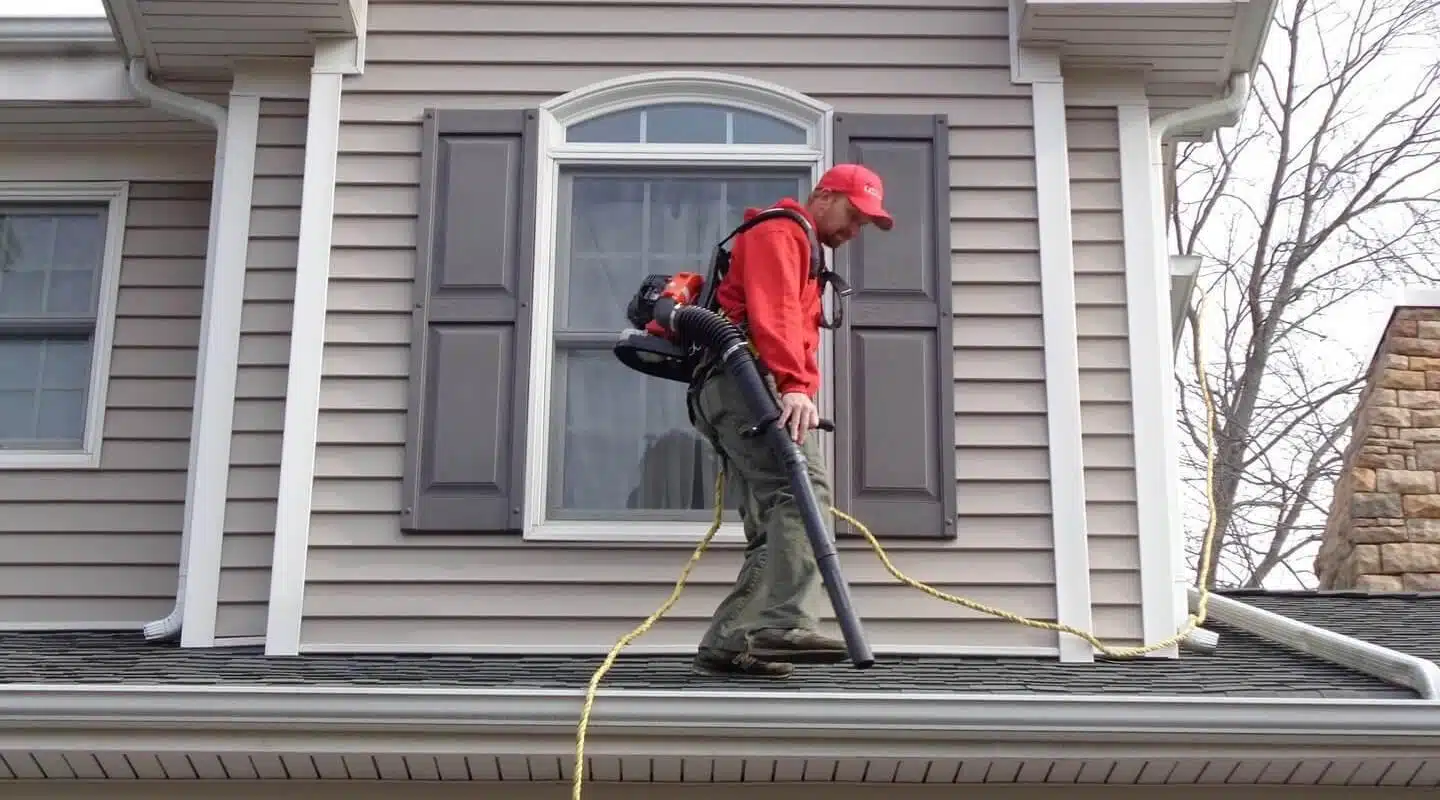
Clean your gutters regularly. Even seamless gutters accumulate leaves, pine needles, and roof granules. We recommend cleaning at least twice a year — spring and fall — and more frequently if your property has heavy tree coverage. Clogged gutters back up and overflow, which defeats the purpose of having a good system.
Schedule periodic inspections. Every cleaning is an opportunity to check for loose hangers, leaking seams at corners, improper pitch, and early signs of fascia damage. Catching small problems early prevents expensive repairs later.
Consider gutter guards. If you are tired of cleaning gutters multiple times a year, properly installed gutter guards reduce the frequency significantly. They are not maintenance-free, but they dramatically cut down on debris accumulation. The key word is properly installed — the wrong guard for your foliage type creates more problems than it solves.
Check your downspouts after heavy storms. Blockages in downspouts can cause the entire gutter run to overflow. If you notice water spilling over the front edge of your gutters during rain, the downspout is usually the first place to check.